Green Updates
Cement-Free Concrete Technology Hits Major Industrial Deployment
A groundbreaking advancement in low-carbon building materials is accelerating as CarbiCrete’s cv moves from pilot scale to industrial production and commercial adoption across North America and Europe. The technology replaces traditional Portland cement — one of the largest contributors to construction-related CO₂ emissions — with industrial steel slag, an abundant by-product of steelmaking. During curing, captured carbon dioxide is permanently mineralized within the concrete, meaning the material not only avoids CO₂ emissions from cement manufacturing but also sequesters carbon inside the product itself.
In Hauts-de-France, France, POINT.P — a major Saint-Gobain brand — and CarbiCrete have announced the launch of the first commercial cement-free concrete block production line, scheduled to begin operations in early 2026. The facility will produce approximately 20,000 tonnes of low-carbon blocks in its first year with plans to double capacity in the following year, a clear sign that low-carbon materials are transitioning into mainstream industrial supply chains.
CarbiCrete’s patented process has already demonstrated performance comparable to conventional concrete while significantly lowering global warming potential (GWP) — industry environmental reports show its blocks can have a carbon footprint up to 20 times lower than standard masonry units.
Beyond production lines, the company has also partnered with Meta to accelerate deployment of low-carbon concrete equipment in Ontario, expanding manufacturing capacity for decarbonized products destined for North American markets.
The combination of industrial scaling, multinational collaboration, and verified environmental benefits
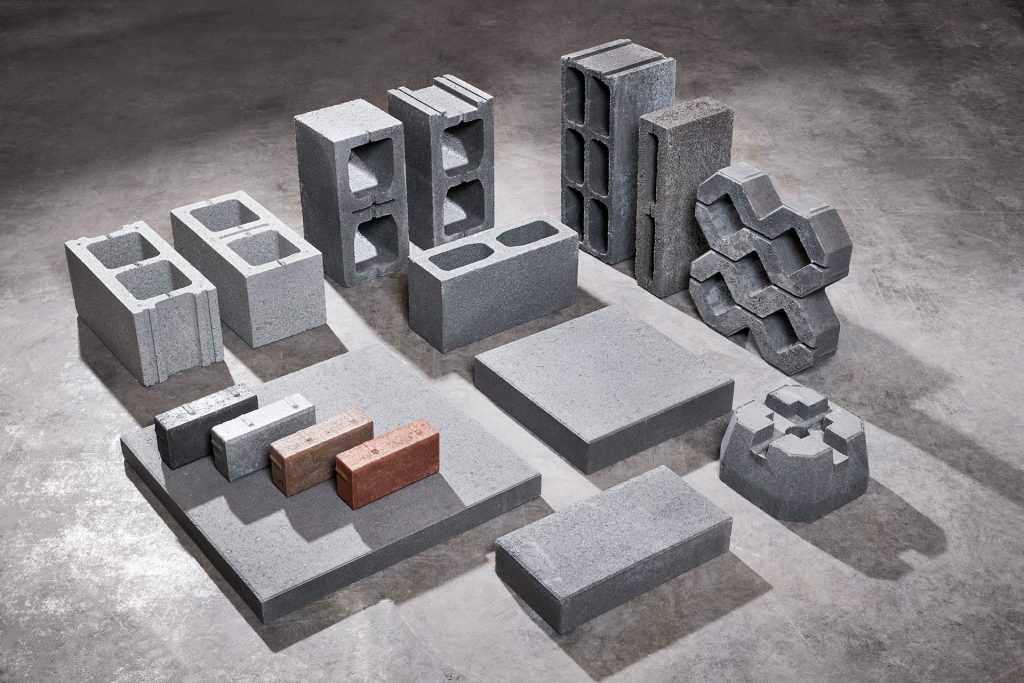
positions CarbiCrete’s technology as a transformative influence on sustainable construction materials — particularly in markets striving for net-zero embodied carbon goals and reduced lifecycle emissions in infrastructure projects.
Construction Market Set to
More Than Double by 2032
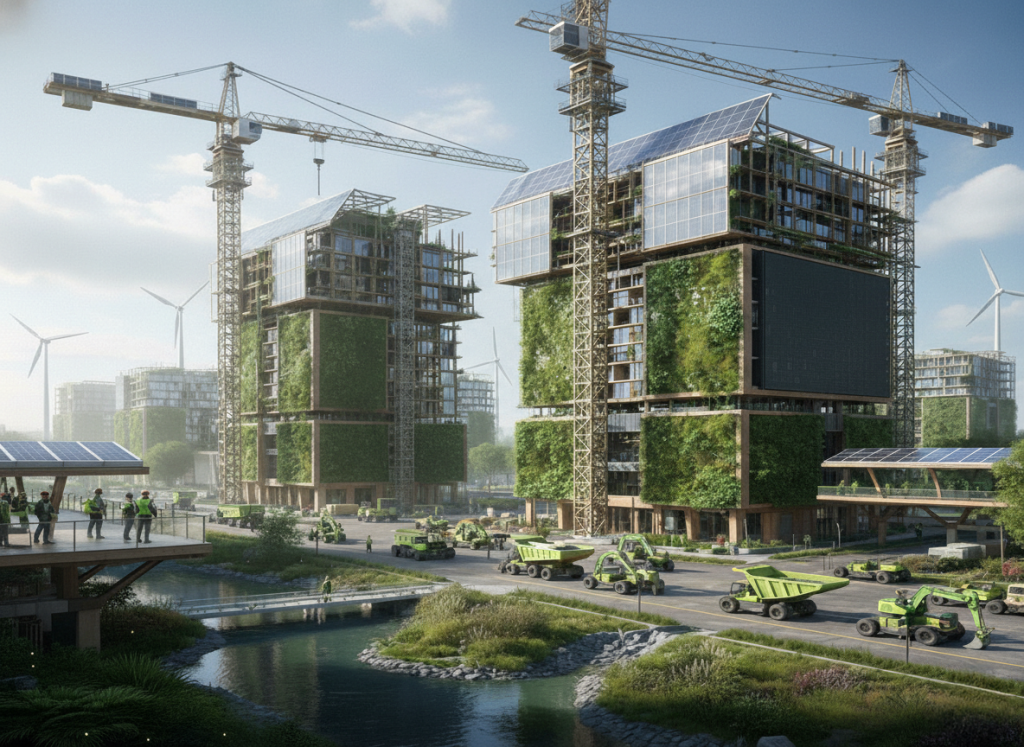
The market for green technology in construction is undergoing rapid expansion as governments, developers, and institutional investors channel funding into sustainable infrastructure and energy-efficient building solutions. According to recent industry research, the global green technology in construction market, valued at approximately US$32.12 billion in 2024, is forecast to grow to US$86.67 billion by 2032, representing a compound annual growth rate (CAGR) of more than 13 % over the next several years.
Driving this surge are several structural forces. Built environment sectors are responding to rising regulatory standards that mandate energy efficiency, emissions reductions, and lifecycle carbon accounting. In many regions, government programs and financial incentives support the deployment of advanced insulation, smart energy systems, and modular green building technologies. For example, the U.S. Department of Energy invests hundreds of millions annually to promote emerging energy-saving technologies in construction.
The anticipated growth reflects not just regulatory pressure but the economic value proposition of green tech — developers and building owners are increasingly seeing reduced operating costs, improved tenant demand, and higher asset value for sustainably constructed buildings. New materials (such as low-carbon concrete, high-performance glazing, and advanced thermal insulation) and digital tools (including AI for energy optimization and IoT building management systems) are among the fastest-growing subsegments.
Market expansion is expected across all regions, North America projected to command a significant share, driven by energy efficiency mandates and private sector commitments to ESG goals. The construction industry’s broader shift toward net-zero targets and sustainability certifications (LEED, BREEAM) further underlines the strategic importance of green technologies in future infrastructure development.
Solar Farms and Bifacial Panel Tech Driving Next-Gen Efficiency

The global solar energy sector continues to evolve rapidly, with multiple technology trends reshaping how solar power is deployed and integrated into buildings and infrastructure. Among the most impactful innovations are bifacial solar panels, which capture sunlight from both the front and back surfaces — boosting generation by up to 20-30 % compared to traditional modules when installed in reflective environments. This increases energy yield without requiring additional land or footprint. Alongside this, emerging perovskite and multi-layer cell materials are delivering higher efficiencies and lower production costs, accelerating commercial deployment of advanced photovoltaic systems. Building-integrated photovoltaics (BIPV) — where solar elements are directly embedded into roofs, facades or even windows — is another transformative trend, enabling structures to generate power at the point of use and reducing dependence on external grids. Digital tools like AI and IoT for performance monitoring and smart grid integration are adding to operational efficiency and predictive maintenance capabilities for solar assets.
These innovations help lower the levelized cost of electricity (LCOE), improve return on investment for developers and investors, and expand applications into urban and commercial projects where space is at a premium.
Long-Duration Energy Storage Market Accelerates as Key Component of Renewable Grid Expansion
The long-duration energy storage (LDES) market — systems capable of storing electricity for hours to days — is emerging as one of the fastest-growing segments of the global clean energy transition. A recent Long-Duration Energy Storage Market Overview Report (2025-2046) underscores how LDES technologies are being positioned as critical infrastructure for deep decarbonization, grid reliability, and high renewable penetration. These storage systems help overcome the intermittent nature of solar and wind power by providing extended discharge capabilities that traditional short-duration batteries cannot deliver.
According to the report, the LDES market is experiencing strong growth, with the global market forecast to expand significantly by 2030 and beyond. The report covers a broad spectrum of storage technologies — including flow batteries, compressed air energy storage (CAES), liquid air energy storage (LAES), gravity storage, and hybrid systems — and highlights the role of innovation and scaling in driving down costs and improving performance.
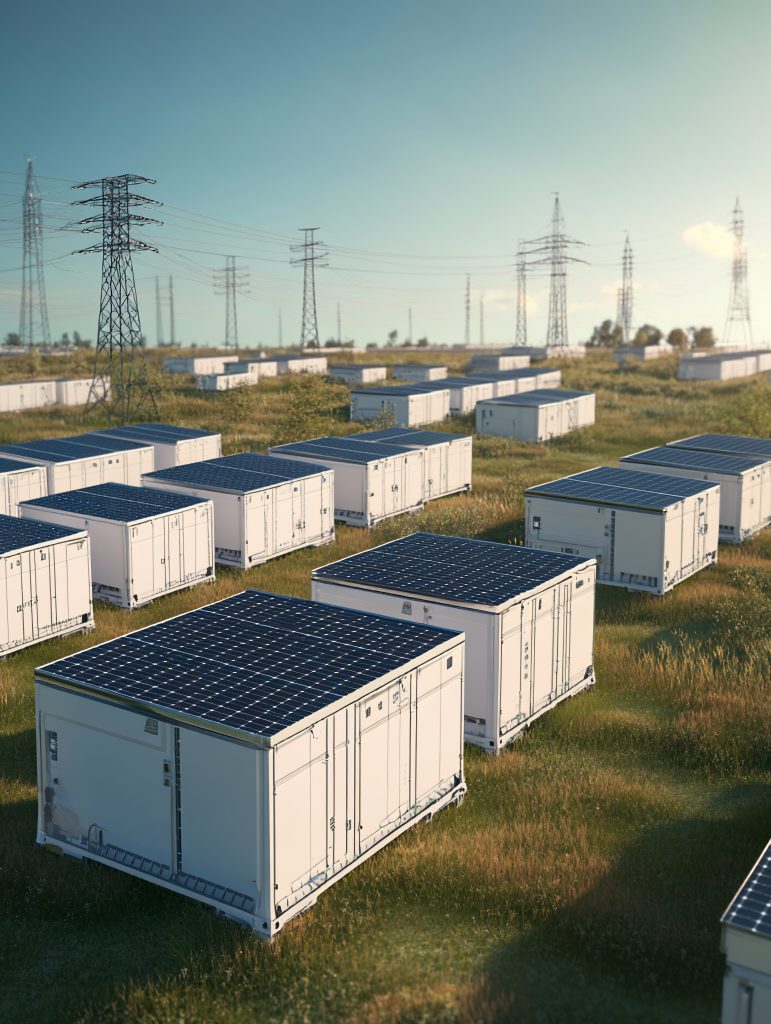
Market expansion is supported by increasing demand for grid flexibility, energy security and reliability, and long-term renewable integration strategies. As electric grids incorporate ever-higher shares of solar and wind generation, long-duration storage helps smooth out supply fluctuations and balance supply-demand mismatches over time scales ranging from hours to days. This functionality becomes especially vital as regions push toward net-zero targets and broaden electrification across sectors like transportation and industry.
In practical terms, LDES projects are gaining momentum worldwide — from innovative liquid air facilities such as those being developed by Highview Power to expanded pipelines of battery storage coupled with renewables in both utility-scale and distributed contexts. As capital flows toward energy storage innovation and deployment, LDES is rapidly evolving from a niche technology into core infrastructure for resilient, clean energy systems.
U.S. Solar Industry Launches New Push on Energy Storage to Strengthen Clean Grid Integration
The Solar Energy Industries Association (SEIA) — the leading solar trade organization in the United States — has intensified its advocacy and strategic efforts to accelerate energy storage deployment alongside solar generation. This renewed push, revealed in January 2026, underscores solar’s evolving role not just as a clean generation source but as part of an integrated solar-plus-storage ecosystem that enhances grid reliability and market value.
SEIA’s campaign emphasizes the importance of utility-scale battery storage systems in capturing, storing, and dispatching solar energy during times of peak demand, evening hours, or grid stress. By pairing storage with solar, developers can help maintain grid stability as intermittent renewables scale, reducing reliance on fossil backups and enabling more resilient power systems. SEIA President and CEO Abigail Ross Hopper highlighted that storage deployment is also a driver of manufacturing growth, job creation, and U.S. competitiveness in the global clean energy economy.
The initiative aims to influence federal, state and local policy to create clearer incentives, remove deployment barriers, and enable faster interconnection of both distributed and grid-scale storage assets. While solar installations have grown rapidly — with solar and storage accounting for the majority of new U.S. power capacity additions in recent years — SEIA notes that storage deployment still faces challenges related to policy uncertainty, permitting and grid integration frameworks.
SEIA’s advocacy is not only about expanding capacity but also about sustaining momentum for manufacturing and job creation. Strengthening domestic storage supply chains — from battery cells to complete systems — will be crucial in meeting both the rising demand for clean energy and broader economic goals. This strategic emphasis reflects how storage is increasingly seen as indispensable to solar’s continued growth and the overall energy transition.